
People usually describe homes using visual language. Bright. Open. Cozy. Minimal. Rarely do they talk about how a home moves. Yet movement is what shapes daily experience more than finishes or furniture ever will. How easily you enter a room. Where you pause. What you need to step around. These moments accumulate into a feeling that is hard to articulate but easy to sense.
Doors sit at the centre of this experience. They choreograph how bodies move through space. A door can invite you in smoothly or force a small adjustment. It can guide traffic naturally or interrupt it. Over time, these micro-movements define whether a home feels calm or slightly resistant.
Traditional hinged doors create a predictable pattern. You approach, step back, pull or push, then navigate around the door leaf. In isolation, this is insignificant. Repeated across a home, it becomes a rhythm. Sometimes that rhythm works. Sometimes it creates subtle friction that people accept without questioning.
Movement-focused design asks a different question. Instead of asking how a room looks when staged, it asks how it behaves when used. Where do people hesitate. Where do paths cross. Where does the architecture demand awareness instead of allowing flow.
In homes where rooms connect closely, door behaviour matters more. Narrow corridors, shared bathrooms, open-plan living zones, and multipurpose spaces all amplify the effect. A door swing that interrupts circulation in one area often causes knock-on effects elsewhere.
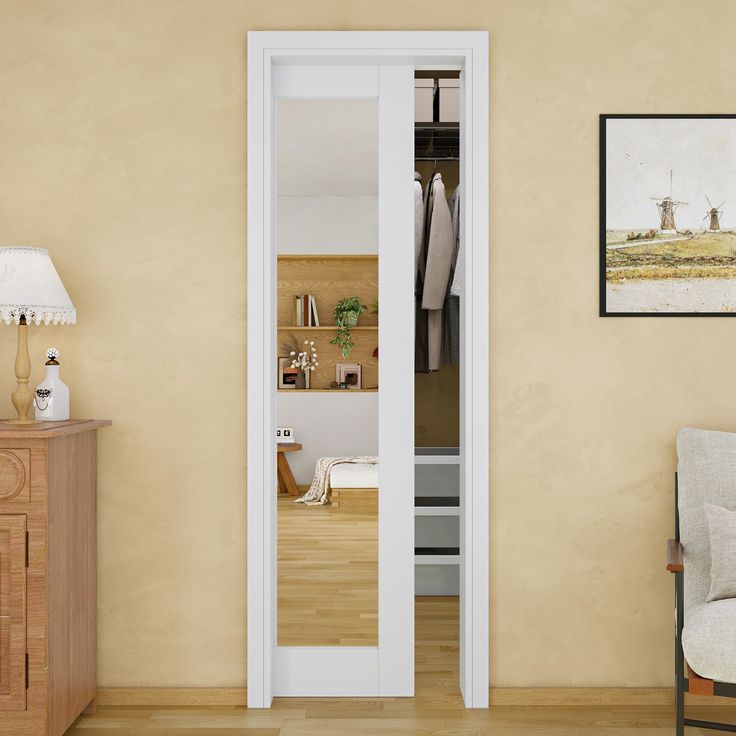
This is where alternative door systems change the conversation. By removing the need for clearance within the room, sliding pocket doors alter movement patterns at a fundamental level. Entry becomes direct. Exits feel cleaner. The door stops being a moment that needs managing.
The psychological impact is subtle but real. When people move through a space without adjusting their bodies, the space feels generous. When they must constantly negotiate around elements, even small ones, the space feels tighter than it is. This has nothing to do with square footage and everything to do with resistance.
Consider a hallway bathroom. With a swinging door, the corridor must accommodate that movement or the bathroom must absorb it. Either way, someone yields space. With a pocketed system, the transition happens without borrowing area from either zone. Movement stays linear.
Living spaces benefit in a different way. When doors do not intrude, rooms feel less segmented even when closed. The boundary exists, but it does not push into the space. This allows furniture and circulation to coexist more naturally.
Designers who focus on accessibility understand this well. Reducing obstacles improves usability for everyone, not just those with mobility needs. Clear paths, predictable walls, and uninterrupted movement reduce cognitive load as well as physical effort.
Door choice also affects how people share space. In busy households, moments of overlap are constant. Someone entering while another exits. Children moving quickly. Adults carrying objects. Doors that swing into these moments create friction. Doors that slide away remove it.
This does not mean every door should disappear. Some rooms benefit from the presence of a hinged door. The key is alignment. The door should support how the space is used, not impose a default behaviour.
What often surprises homeowners is how strongly door choice influences the emotional tone of a home. Spaces with smoother movement tend to feel calmer. Less reactive. More intentional. The architecture feels like it is working with you rather than asking for accommodation.
From a planning perspective, this shifts priorities. Instead of treating doors as a finishing detail, they become part of the spatial strategy. Their behaviour is considered alongside circulation, zoning, and daily routines.
In homes designed around movement, doors are no longer interruptions. They are transitions. When handled thoughtfully, sliding pocket doors allow those transitions to happen quietly, without pulling attention away from the experience of the space itself.
The result is rarely dramatic in photographs. It is felt instead, in the way rooms connect and daily life unfolds. A home that moves well often feels better than one that simply looks good.